Legend
What Millie knows.
Processes, people, sources, and operating knowledge.

The Millie platform
Bring business context, governed action, and approved learning into one operating system.
One connected system. Built around your business.
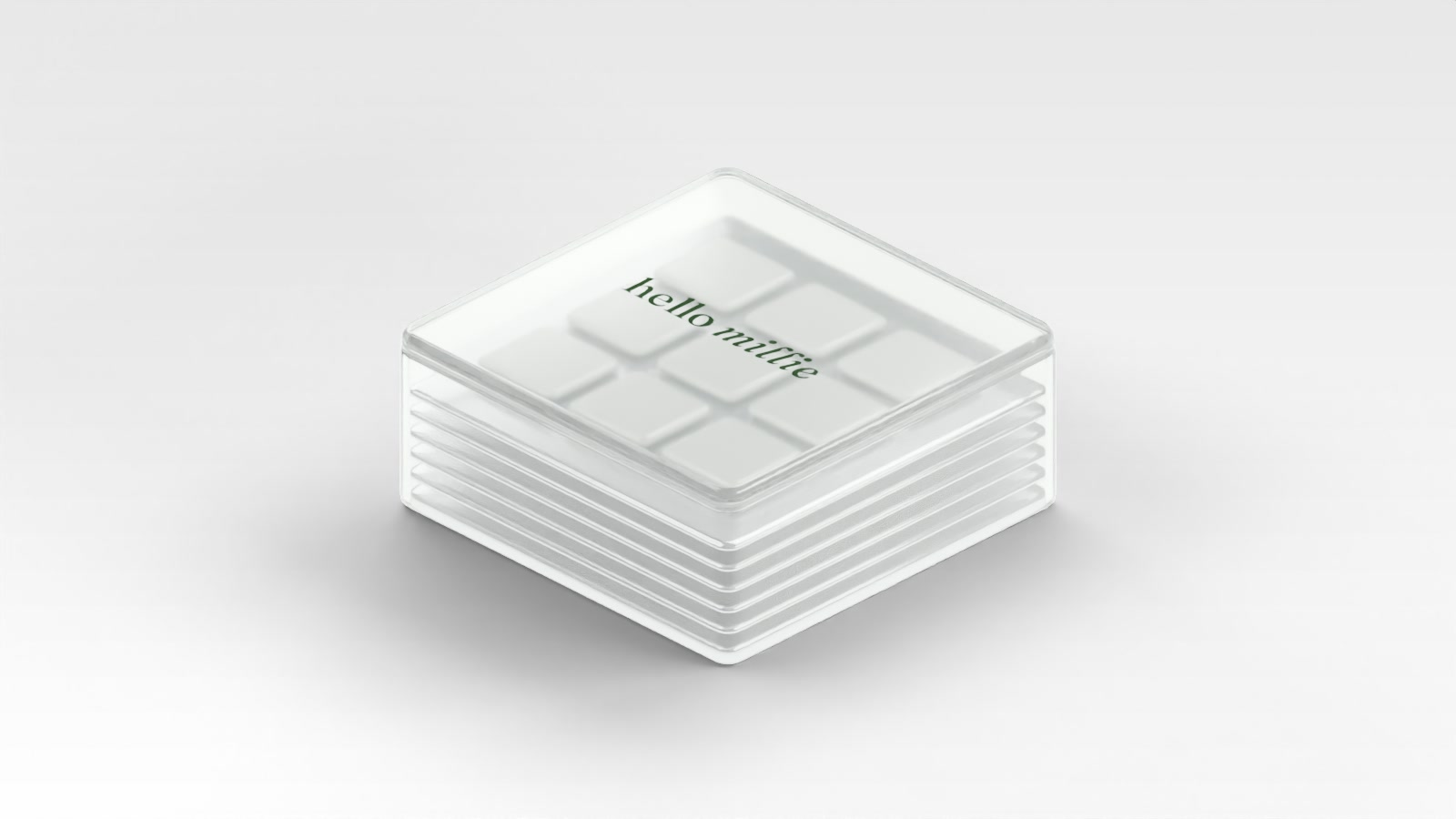 The nine interface tiles are labelled Email, Chat, Calendar, CRM, Files, Tasks, Reports, Approvals, and Apps.
Legend connects your processes, customer history, and operating knowledge into shared business context.
Control defines what may run, what needs approval, and when the right person must step in.
Runtime carries out authorized work across connected systems, recording decisions, actions, and outcomes.
Fabric evaluates proposed improvements. Changes are approved before they shape future work.
Approvals brings evidence and the next decision to the responsible person. Action and learning approvals remain separate.
Snippets gives teams operational views built from the same shared business context.
Your skills, evidence, and approved learning stay yours. A portable, task-specific model is the long-term goal.
One system connecting business knowledge, judgment, and execution.
The intelligence stays yours.
One connected operating loop
Six steps. A clear record. Better starting points for the next decision.
Gather the evidence and operating context.
Recommend the next action using versioned skills.
Apply policy. Escalate what needs a person.
Execute the authorized work. Record the result.
Evaluate the outcome against your criteria.
Test proposed changes. Approve before reuse.
Action approval is not learning approval. A successful case does not authorize new behavior.
Inside the platform
Processes, people, sources, and operating knowledge.
Policies, permissions, escalation routes, and audit records.
Active cases, skill versions, and exceptions.
Evidence-backed decisions that need a person.
Private evaluations, proposed lessons, and approved improvements.
Operational views built on the same business context.
Intelligence you own
Reuse what works. Match the model to the task. Keep the intelligence you build.
Reuse approved rules and evidence across recurring work.
Evaluate smaller, tuned models against your private tests. Develop portable open weights over time.
Use greater capability where it changes the outcome, within your policy.
Practical questions
No. Your policy distinguishes automatic, approval-required, human-only, and disabled behaviors. Eligible routine work can run within those boundaries; exceptions go to the responsible person.
The ownership model centers on your operating skills, rules, tests, case evidence, and approved lessons, with a task-specific model and portable open weights developed over time. The working engagement defines the account setup, portability, and contractual details.
No. An improvement may be a clearer instruction, a shorter tool path, a new regression test, or a boundary-condition fix. Model tuning is one option. Changes are evaluated before promotion and follow the appropriate approval policy.
Choose one recurring decision, an accountable business owner, and a way to judge the outcome. In a 90-minute session we map the evidence, approval boundaries, and actions, then scope the first operating loop.
Yes. The product prototype lets you explore Approvals, Legend, Control, Runtime, Fabric, and Snippets. A working session connects that product view to your own business workflow.
Start with one decision